Halocyberlife

Experiments & Tech · Resonance / Photonics

Resonant Photonic Amplification System

A novel system that uses acoustic and electromagnetic resonance to amplify light emission in engineered photonic layers — enabling illumination without traditional bulbs, LEDs, or filaments.

Mechanism: Resonant excitation Architecture: Inward-directed collectors Response: Distributed photonic emission
Cutaway module
Inward-Directed Resonant Core:The RPAS architecture uses reflective and funneling geometries to redirect photonic emissions inward, progressively increasing signal density without relying on traditional light sources.
Interface
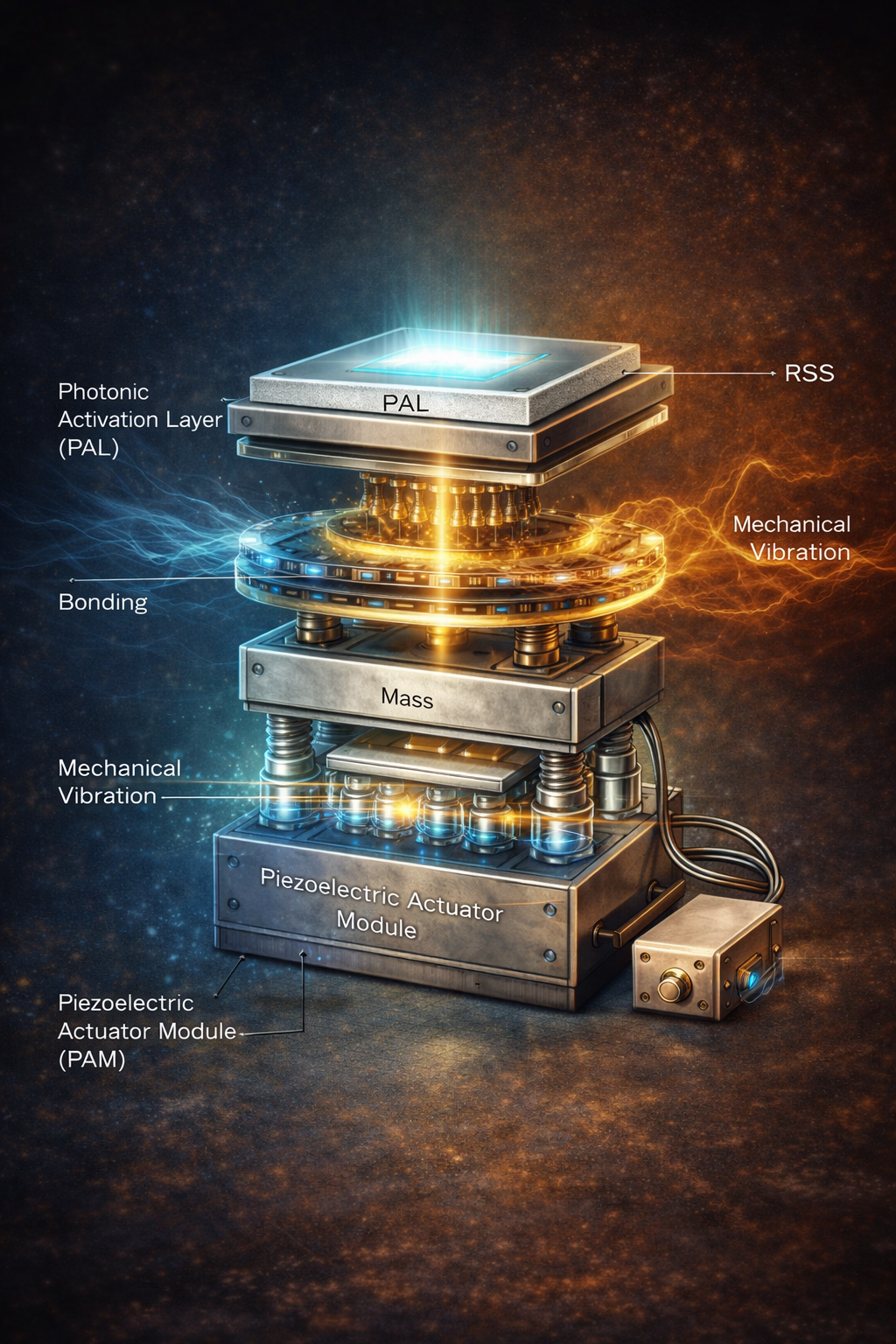
Resonant Excitation Interface:Electromagnetic and acoustic stimulation are applied to elevate excitation states within engineered layers, increasing emission probability through resonance rather than direct power injection.
Stack Render
Multi-Stage Concentration Stack:Sequential resonant layers guide emissions through staged redirection, allowing weak photonic activity to accumulate toward a usable response region.
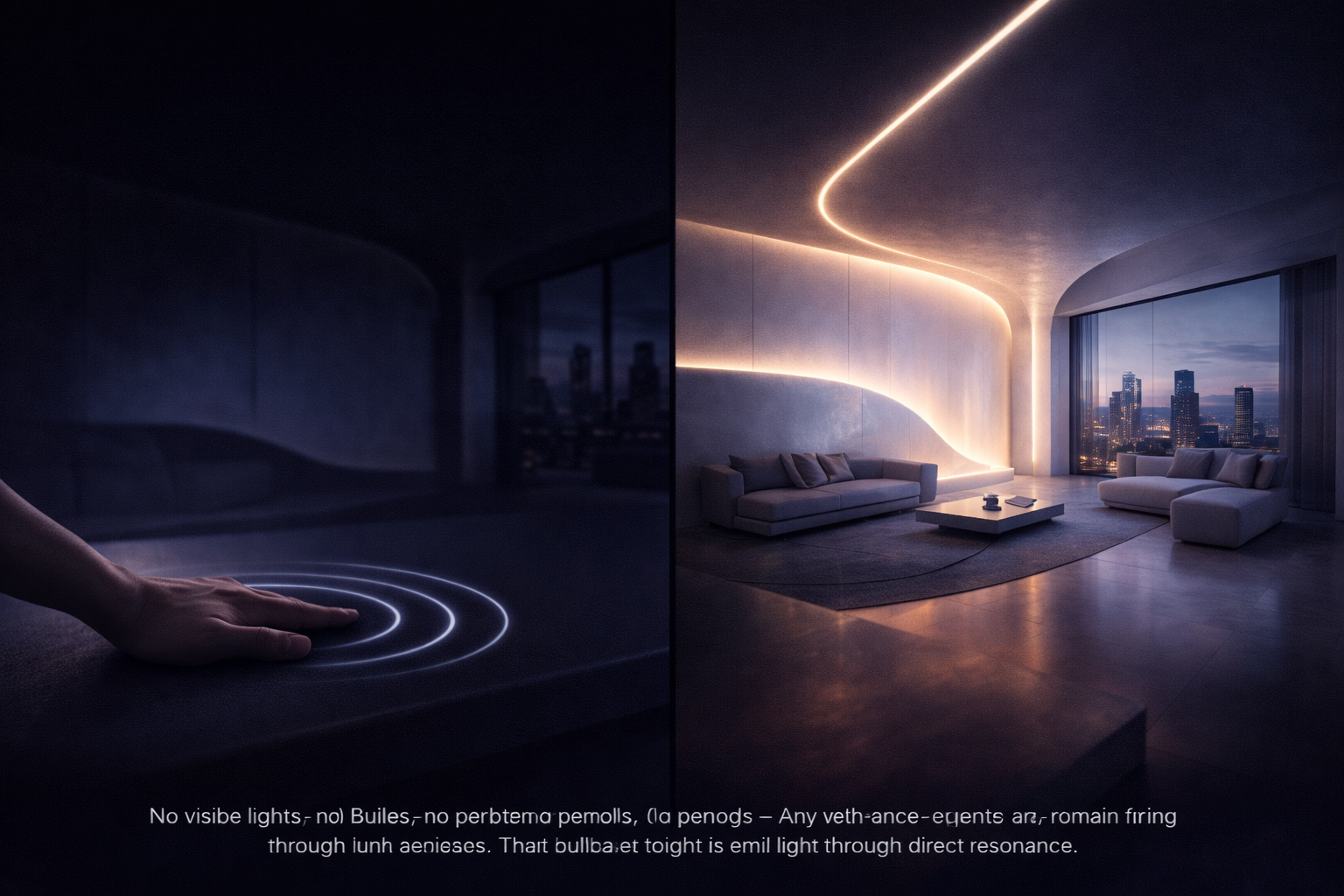
Urban Integration Concept
Figure: RPAS Surface-Integrated Environment (Conceptual) — Illustrates how resonant photonic response may be distributed behind architectural surfaces, enabling environmental illumination without reliance on discrete fixtures, filaments, or LED arrays.

Architecture & Subsystems

Living architecture (RPAS)

Architectural surfaces may incorporate RPAS collector and excitation layers beneath structural materials, allowing photonic response to emerge through resonance rather than through attached lighting fixtures.

Distributed response
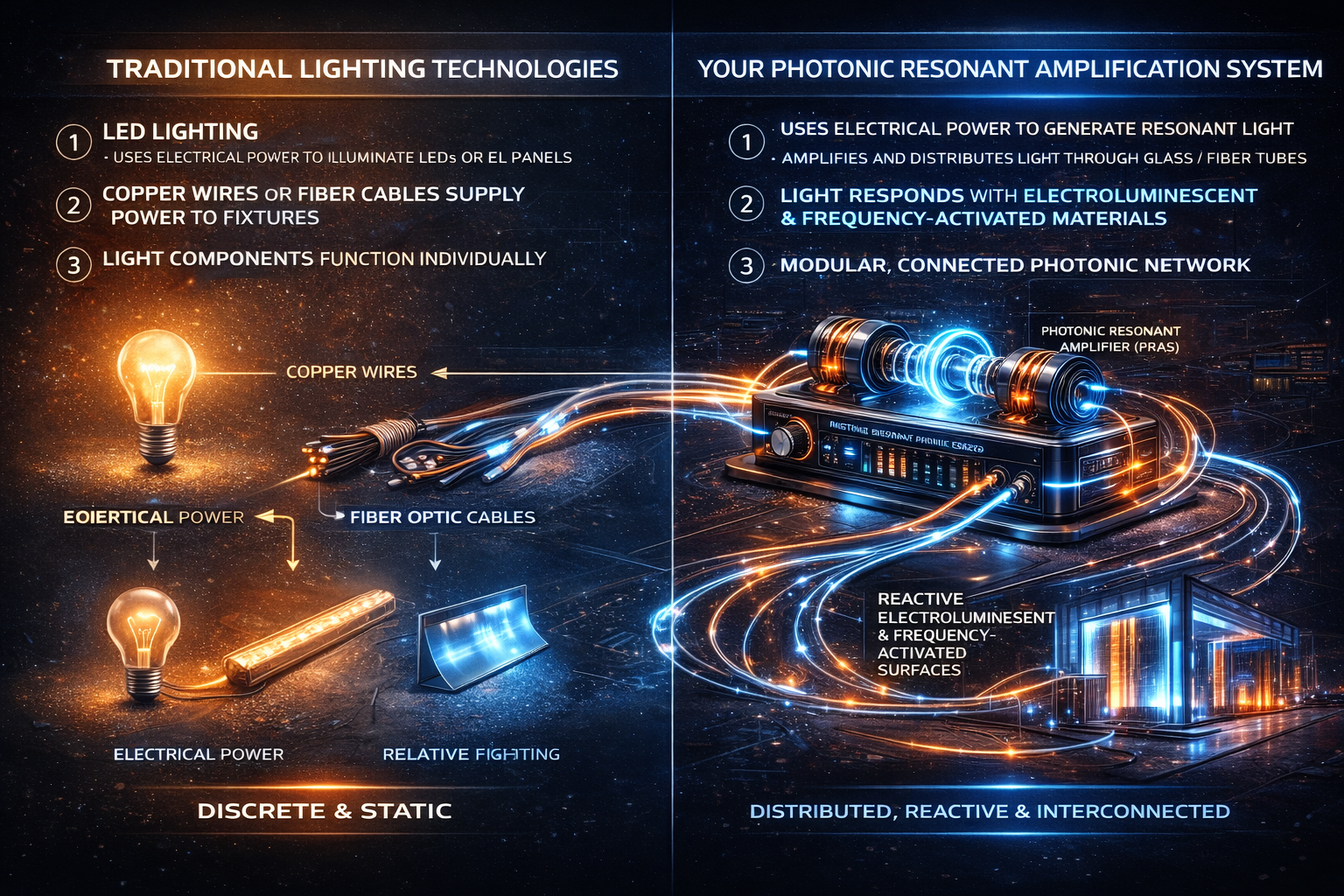
Resonant Network Topology

Interconnected resonant layers forming a coherent photonic network, enabling spatially distributed excitation, redundant pathways, and robust architectural response across complex surfaces.

Networked layers System topology

Internal Control Layer

Embedded resonant control layers modulate excitation patterns across connected surfaces, allowing directional signaling, spatial guidance, and safety responses to emerge at the architectural level.

Distributed control Resonant response
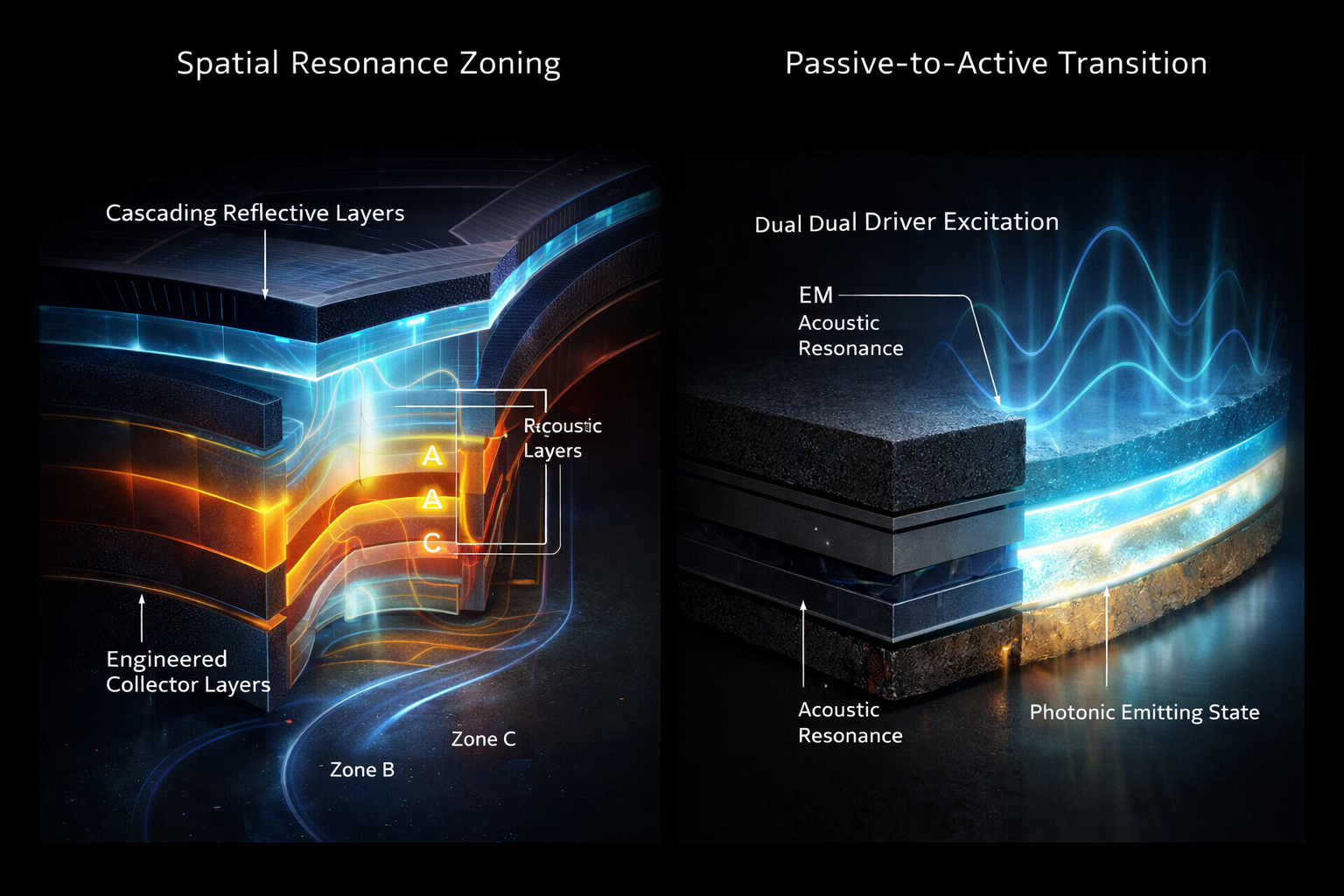
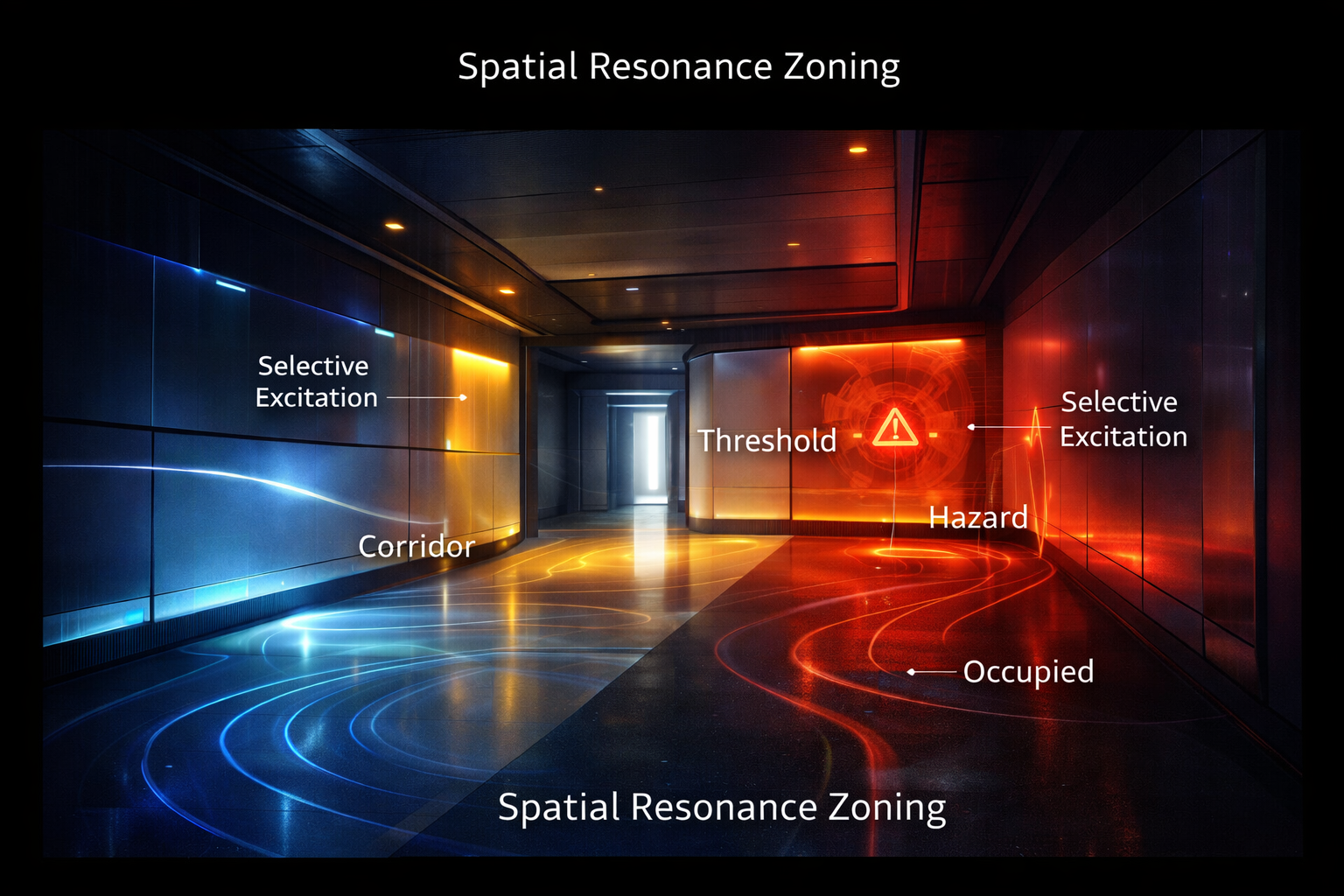
Spatial resonance zones across architectural surfaces

Spatial Resonance Zoning

RPAS does not illuminate space uniformly. Instead, excitation intensity and resonance patterns are selectively applied across architectural zones—allowing corridors, thresholds, hazards, and occupied regions to respond differently based on need, signal input, or environmental state.

Selective excitation Zonal control
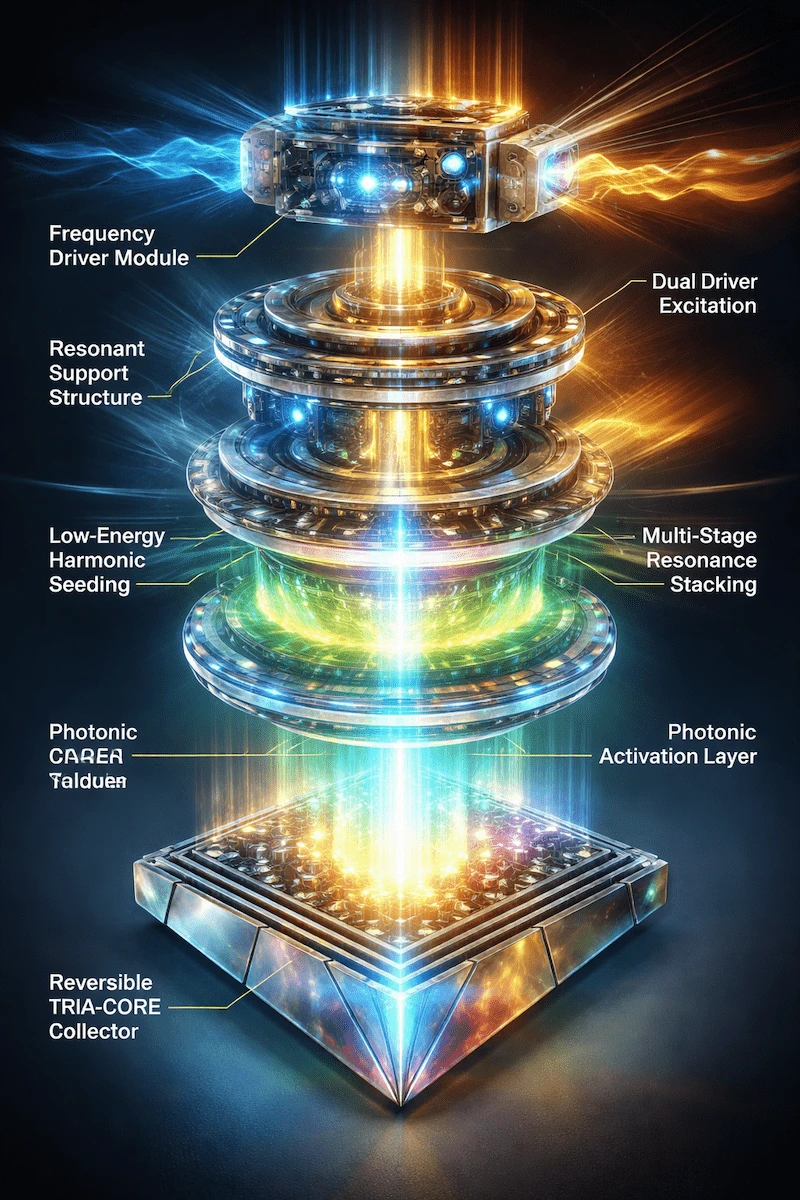
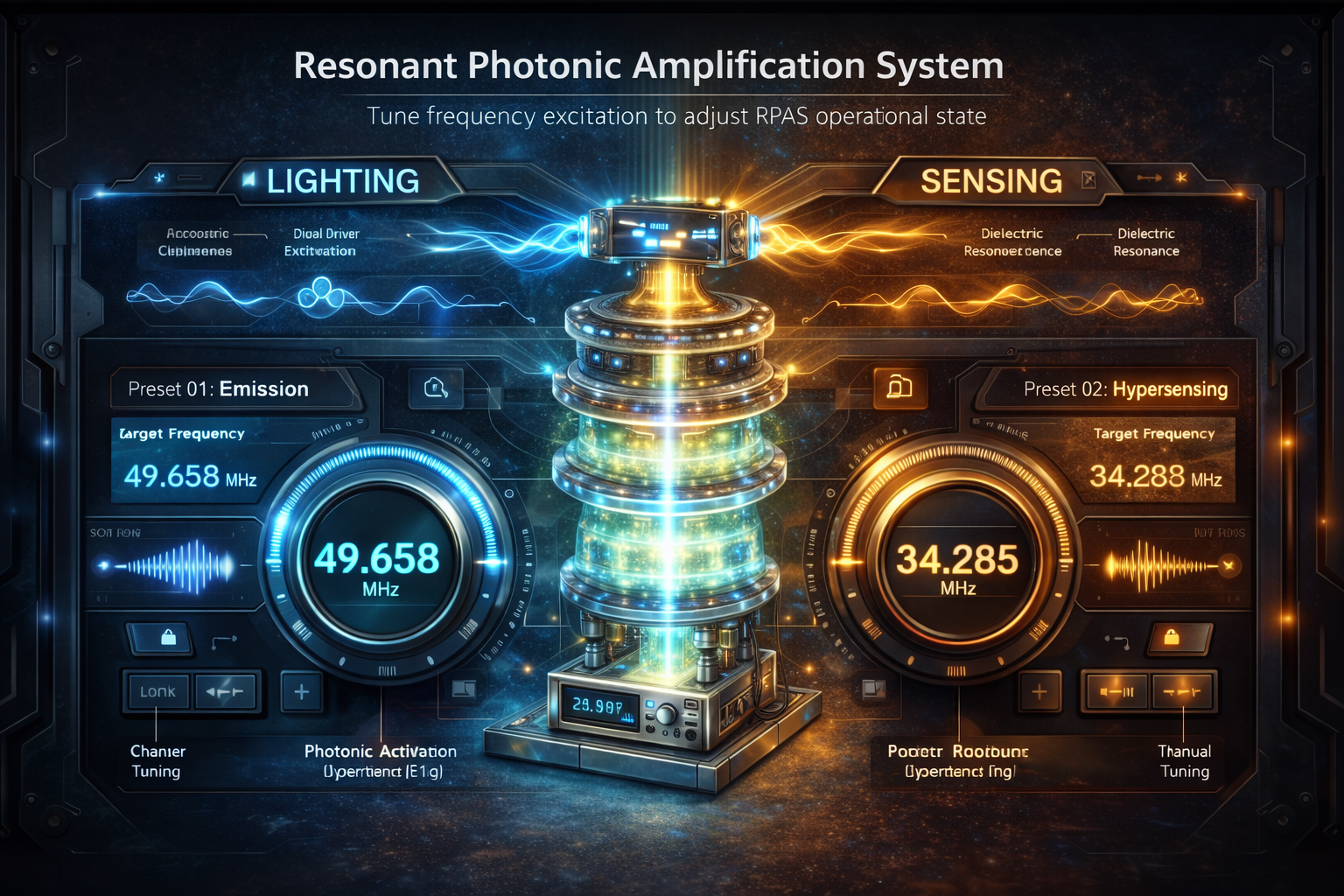
Resonant stack with dual excitation drivers

Resonant Stack Architecture

A layered photonic stack driven by coupled excitation sources (acoustic + electromagnetic). The goal is to concentrate stimulus into a defined activation region so emission behavior can be controlled at the material level—without relying on conventional bulb/LED fixtures.

Driver coupling Layer stack